Indications and Usage
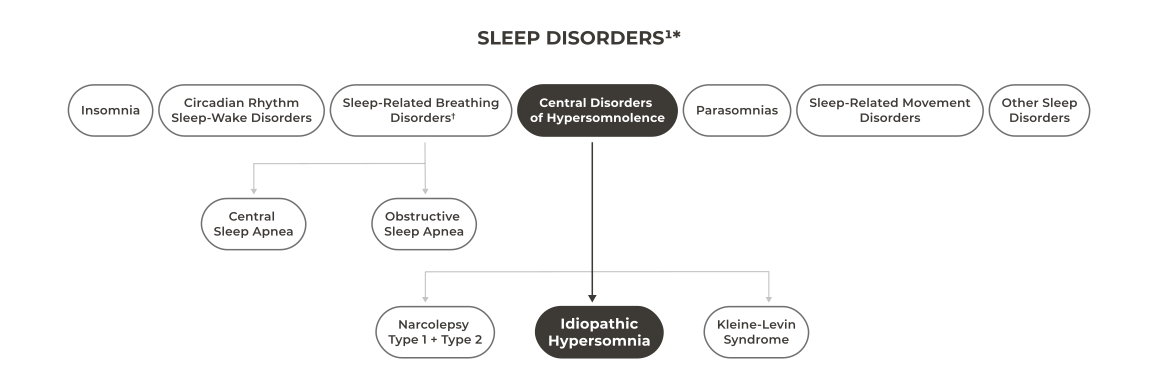
XYWAV® (calcium, magnesium, potassium, and sodium oxybates) oral solution, 0.5 g/mL total salts (equivalent to 0.413 g/mL of oxybate) is indicated for the treatment of cataplexy or excessive daytime sleepiness (EDS) in patients 7 years of age and older with narcolepsy, and for the treatment of idiopathic hypersomnia (IH) in adults.
Important Safety Information
WARNING: CENTRAL NERVOUS SYSTEM DEPRESSION and ABUSE AND MISUSE.
- Central Nervous System DepressionXYWAV is a CNS depressant. Clinically significant respiratory depression and obtundation may occur in patients treated with XYWAV at recommended doses. Many patients who received XYWAV during clinical trials in narcolepsy and idiopathic hypersomnia were receiving CNS stimulants.
- Abuse and MisuseThe active moiety of XYWAV is oxybate or gamma-hydroxybutyrate (GHB). Abuse or misuse of illicit GHB, either alone or in combination with other CNS depressants, is associated with CNS adverse reactions, including seizure, respiratory depression, decreases in the level of consciousness, coma, and death.
Because of the risks of CNS depression and abuse and misuse, XYWAV is available only through a restricted program under a Risk Evaluation and Mitigation Strategy (REMS) called the XYWAV and XYREM REMS.
Contraindications
XYWAV is contraindicated
- in combination with sedative hypnotics or alcohol and
- in patients with succinic semialdehyde dehydrogenase deficiency.
Warnings and Precautions
Central Nervous System Depression
The concurrent use of XYWAV with other CNS depressants, including but not limited to opioid analgesics, benzodiazepines, sedating antidepressants or antipsychotics, sedating anti-epileptic drugs, general anesthetics, muscle relaxants, and/or illicit CNS depressants, may increase the risk of respiratory depression, hypotension, profound sedation, syncope, and death. If use of these CNS depressants in combination with XYWAV is required, dose reduction or discontinuation of one or more CNS depressants (including XYWAV) should be considered. In addition, if short-term use of an opioid (eg, post- or perioperative) is required, interruption of treatment with XYWAV should be considered.
After first initiating treatment and until certain that XYWAV does not affect them adversely (eg, impair judgment, thinking, or motor skills), caution patients against hazardous activities requiring complete mental alertness or motor coordination such as operating hazardous machinery, including automobiles or airplanes. Also caution patients against these hazardous activities for at least 6 hours after taking XYWAV. Patients should be queried about CNS depression-related events upon initiation of XYWAV therapy and periodically thereafter.
Abuse and Misuse
XYWAV is a Schedule III controlled substance. The active moiety of XYWAV is oxybate, also known as gamma-hydroxybutyrate (GHB), a Schedule I controlled substance. Abuse of illicit GHB, either alone or in combination with other CNS depressants, is associated with CNS adverse reactions, including seizure, respiratory depression, decreases in the level of consciousness, coma, and death. The rapid onset of sedation, coupled with the amnestic features of GHB particularly when combined with alcohol, has proven to be dangerous for the voluntary and involuntary user (eg, assault victim). Physicians should carefully evaluate patients for a history of drug abuse and follow such patients closely.
XYWAV and XYREM REMS
- Because of the risks of central nervous system depression and abuse and misuse, XYWAV is available only through a restricted distribution program called the XYWAV and XYREM REMS.
Notable requirements of the XYWAV and XYREM REMS include the following:
- Healthcare Providers who prescribe XYWAV are specially certified
- XYWAV will be dispensed only by the central pharmacy that is specially certified
- XYWAV will be dispensed and shipped only to patients who are enrolled in the XYWAV and XYREM REMS with documentation of safe use
Further information is available at www.XYWAVXYREMREMS.com or 1-866-997-3688.
Respiratory Depression and Sleep‑Disordered Breathing
XYWAV may impair respiratory drive, especially in patients with compromised respiratory function. In overdoses of oxybate and with illicit use of GHB, life-threatening respiratory depression has been reported. Increased apnea and reduced oxygenation may occur with XYWAV administration in adult and pediatric patients. A significant increase in the number of central apneas and clinically significant oxygen desaturation may occur in patients with obstructive sleep apnea treated with XYWAV. Prescribers should be aware that sleep-related breathing disorders tend to be more prevalent in obese patients, in men, in postmenopausal women not on hormone replacement therapy, and among patients with narcolepsy.
Depression and Suicidality
In Study 1, the randomized-withdrawal clinical trial in adult patients with narcolepsy (n=201), depression and depressed mood were reported in 3% and 4%, respectively, of patients treated with XYWAV. Two patients (1%) discontinued XYWAV because of depression. In most cases, no change in XYWAV treatment was required.
In Study 2, the randomized-withdrawal clinical trial in adult patients with idiopathic hypersomnia (n=154), depression and depressed mood were reported in 1% and 3%, respectively, of patients treated with XYWAV. All patients continued XYWAV treatment.
Two suicides and two attempted suicides occurred in adult clinical trials with oxybate (same active moiety as XYWAV). One patient experienced suicidal ideation and two patients reported depression in a pediatric clinical trial with oxybate. These events occurred in patients with and without previous histories of depressive disorders. The emergence of depression in patients treated with XYWAV requires careful and immediate evaluation. Monitor patients for the emergence of increased depressive symptoms and/or suicidality while taking XYWAV.
Other Behavioral or Psychiatric Adverse Reactions
In Study 1, confusion and anxiety occurred in 1% and 5% of patients with narcolepsy treated with XYWAV, respectively. One patient experienced visual hallucinations and confusion after ingesting approximately 9 grams of XYWAV.
In Study 2, confusion and anxiety occurred in 3% and 16% of patients with idiopathic hypersomnia, respectively. One patient experienced visual hallucinations, which led to discontinuation of XYWAV.
Other neuropsychiatric reactions reported with oxybate (same active moiety as XYWAV) in adult or pediatric clinical trials and in the postmarketing setting include hallucinations, paranoia, psychosis, aggression, agitation, confusion and anxiety. The emergence or increase in the occurrence of behavioral or psychiatric events in patients taking XYWAV should be carefully monitored.
Parasomnias
Parasomnias can occur in patients taking XYWAV.
In Study 1 and Study 2, parasomnias, including sleepwalking, were reported in 6% and 5% of adult patients treated with XYWAV, respectively.
In a clinical trial of XYREM (same active moiety as XYWAV) in adult patients with narcolepsy, five instances of sleepwalking with potential injury or significant injury were reported. Parasomnias, including sleepwalking, have been reported in a pediatric clinical trial with sodium oxybate (same active moiety as XYWAV) and in postmarketing experience with sodium oxybate.
Episodes of sleepwalking should be fully evaluated and appropriate interventions considered.
Most Common Adverse Reactions
The most common adverse reactions (occurring in ≥5% of XYWAV-treated patients in adult clinical trials in either narcolepsy or IH) were nausea, headache, dizziness, anxiety, insomnia, decreased appetite, hyperhidrosis, vomiting, diarrhea, dry mouth, parasomnia, somnolence, fatigue, and tremor.
In the pediatric clinical trial with XYREM (same active moiety as XYWAV) that included pediatric patients 7 to 17 years of age with narcolepsy, the most common adverse reactions (≥5%) were nausea (20%), enuresis (19%), vomiting (18%), headache (17%), weight decreased (13%), decreased appetite (9%), dizziness (8%), and sleepwalking (6%). The overall adverse reaction profile of XYREM in the pediatric clinical trial was similar to that seen in the adult clinical trial program. The safety profile in pediatric patients with XYWAV is expected to be similar to that of adult patients treated with XYWAV and to that of pediatric patients treated with XYREM.
Additional Adverse Reactions
Adverse reactions that occurred in 2-<5% of adult patients treated with XYWAV in the Open-Label Titration and Stable Dose Periods of the randomized-withdrawal study in adult patients with narcolepsy with cataplexy (Study 1) were fatigue, dry mouth, depressed mood, enuresis, irritability, paresthesia, depression, tremor, somnolence, and muscle spasms. Adverse reactions occurring in 2-<5% of patients treated with XYWAV in the IH study include balance disorder, muscle spasms, fall, paresthesia, snoring, weight decreased, bruxism, confusional state, depressed mood, feeling drunk, and irritability.
Adverse reactions that occurred in ≥2% of patients in clinical studies with oxybate (but not in Study 1) and which may be relevant for XYWAV, were pain, feeling drunk, pain in extremity, cataplexy, disturbance in attention, sleep paralysis, and disorientation.
Discontinuation: In Study 1, 9 of 201 patients (4%) reported adverse reactions that led to withdrawal from the study (anxiety, decreased appetite, depressed mood, depression, fatigue, headache, irritability, nausea, pain in extremity, parasomnia, somnolence, and vomiting). The most common adverse reaction leading to discontinuation was nausea (1.5%). In Study 2, 17 of 154 (11%) patients across all study periods (excluding placebo during the DB RWP) (up to 42 weeks) reported adverse reactions that led to withdrawal from the study (anxiety, nausea, insomnia, vomiting, fatigue, feeling abnormal, fall, decreased appetite, dizziness, paresthesia, tremor, parasomnia, confusional state, hallucination visual, and irritability). The most common adverse reaction leading to discontinuation was anxiety (3.2%). In Study 1 and Study 2, the majority of adverse reactions leading to discontinuation began during the first few weeks of treatment.
In the pediatric clinical trial with XYREM (same active moiety as XYWAV), 7 of 104 patients reported adverse reactions that led to withdrawal from the study (hallucination, tactile; suicidal ideation; weight decreased; sleep apnea syndrome; affect lability; anger, anxiety, depression; and headache).
Drug Interactions
XYWAV is contraindicated in combination with alcohol or sedative hypnotics. Use of other CNS depressants may potentiate the CNS-depressant effects of XYWAV.
Concomitant use of sodium oxybate with divalproex sodium results in an increase in systemic exposure to GHB, which was shown to cause a greater impairment on some tests of attention and working memory in a clinical study. A similar increase in exposure is expected with concomitant use of XYWAV and divalproex sodium; therefore, an initial dose reduction of XYWAV is recommended when used concomitantly with divalproex sodium. Prescribers are advised to monitor patient response closely and adjust dose accordingly if concomitant use of XYWAV and divalproex sodium is warranted.
Pregnancy and Lactation
There are no adequate data on the developmental risk associated with the use of XYWAV or sodium oxybate in pregnant women. XYWAV should be used during pregnancy only if the potential benefit justifies the potential risk to the fetus. GHB is excreted in human milk after oral administration of sodium oxybate. There is insufficient information on the risk to a breastfed infant, and there is insufficient information on milk production in nursing mothers. The developmental and health benefits of breastfeeding should be considered along with the mother’s clinical need for XYWAV and any potential adverse effects on the breastfed infant from XYWAV or from the underlying maternal condition.
Pediatric Use
The safety and effectiveness of XYWAV for the treatment of cataplexy or excessive daytime sleepiness in pediatric patients 7 years of age and older with narcolepsy have been established. XYWAV has not been studied in a pediatric clinical trial for narcolepsy or IH. Use of XYWAV in pediatric patients 7 years of age and older with narcolepsy is supported by evidence from an adequate and well-controlled study of sodium oxybate in pediatric patients 7 to 17 years of age, a study in adults showing a treatment effect of XYWAV similar to that observed with sodium oxybate, pharmacokinetic data of sodium oxybate from adult and pediatric patients, and pharmacokinetic data of XYWAV from healthy adult volunteers.
Safety and effectiveness of XYWAV in pediatric patients below the age of 7 years with narcolepsy have not been established.
Safety and effectiveness of XYWAV for the treatment of idiopathic hypersomnia in pediatric patients have not been established.
Geriatric Use
In general, dose selection for an elderly patient should be cautious, usually starting at the low end of the dosing range, reflecting the greater frequency of decreased hepatic, renal, or cardiac function, and of concomitant disease or other drug therapy.
Hepatic Impairment
The starting dose of XYWAV should be reduced in patients with liver impairment.
Dosage Modification in Patients with Hepatic Impairment: The recommended starting dosage in patients with hepatic impairment is one-half of the original dosage per night, administered orally, divided into two doses.
Dependence and Tolerance
There have been case reports of withdrawal, ranging from mild to severe, following discontinuation of illicit use of GHB at frequent repeated doses (18 g to 250 g per day) in excess of the recommended dosage range. Signs and symptoms of GHB withdrawal following abrupt discontinuation included insomnia, restlessness, anxiety, psychosis, lethargy, nausea, tremor, sweating, muscle cramps, tachycardia, headache, dizziness, rebound fatigue and sleepiness, confusion, and, particularly in the case of severe withdrawal, visual hallucinations, agitation, and delirium. These symptoms generally abated in 3 to 14 days. In cases of severe withdrawal, hospitalization may be required.
In the clinical trial experience with XYREM in narcolepsy/cataplexy patients at recommended doses, two patients reported anxiety and one reported insomnia following abrupt discontinuation at the termination of the clinical trial; in the two patients with anxiety, the frequency of cataplexy had increased markedly at the same time. In the XYWAV clinical trial in adult narcolepsy/cataplexy patients at recommended doses, one patient reported insomnia following abrupt discontinuation of XYWAV. In the XYWAV clinical trial in adult idiopathic hypersomnia patients at recommended doses, six patients reported insomnia, two patients reported early insomnia, and one patient reported visual and auditory hallucinations following abrupt discontinuation of XYWAV.
Tolerance to XYWAV has not been systematically studied in controlled clinical trials. There have been some case reports of symptoms of tolerance developing after illicit use at dosages far in excess of the recommended XYWAV dosage regimen.
Please see full Prescribing Information, including BOXED Warning.